|
|
 |
Acupuncture
Acupuncture is one branch of the vast and ancient tradition of Oriental Medicine. Acupuncture and Oriental Medicine have developed over the course of at least 2,000 years. The techniques and treatments have withstood the test of time and have spread across the entire globe.
Over the course of these thousands of years, practitioners of Oriental Medicine have mapped energy pathways that form a network of interconnected channels or “meridians” which cover the body from the top of the head to the bottoms of the feet. These pathways are where we find the acupuncture points. The energy that travels in these pathways is known as “qi” (pronounced “chee”). According to Oriental Medical theory, qi is responsible for all physiological functioning in the body. When an acupuncturist inserts needles into the body, they are affecting the qi of the patient in order to produce the desired outcome.
Most diseases arise because of a disharmony of the body’s qi. This may involve a blockage, an excess, or a deficiency of qi in the body. The stimulation of acupuncture points with needles sends specific messages to the body which empower the body to use its innate healing abilities to rebalance itself.
Additionally, acupuncture treats the whole person. All signs and symptoms (even ones that may seem unrelated to the main problem) are used in order to come up with a diagnosis. We aim to balance the body’s qi which is reflected in the physical, mental, emotional and spiritual health of the person.
During your initial visit we will thoroughly discuss your health history and other pertinent information. We will feel your radial pulse, palpate your abdomen, ask to look at your tongue and possibly palpate other parts of your body. All of these examinations are used to gather important diagnostic information. We will use this information, along with your presenting symptoms, in order to determine your Oriental Medical diagnosis. Together, the patient and the practitioner will set goals for treatment.
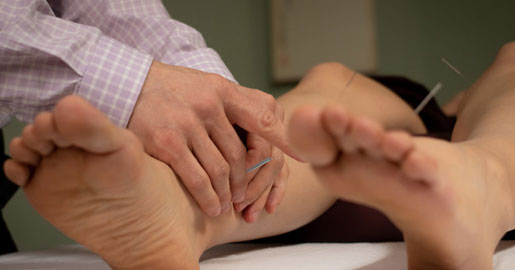
The treatment itself will involve the insertion of hair-thin needles into the body. A majority of the points used are below the knees and elbows. Once the needles are inserted you may feel sensations of heaviness, warmth, tingling or a dull ache in the area of the needle. All of the needles that we use are sterile, single-use, disposable needles. Adjunctive treatments may be used as needed. These include: heat treatments, cupping, therapeutic massage and other bodywork. We will always discuss these options with you before using them. Many people find acupuncture treatments to be very relaxing.
The initial consultation and treatment will usually take 90 minutes. Follow-up treatments typically last for one hour. Please wear loose, comfortable clothing.
Other Commonly Asked Questions About Acupuncture
Acupuncture is very safe. We use sterilized, single-use needles. The risk of adverse effects is extremely low.
You may feel a pinching sensation when the needles are inserted, although often you will feel nothing at all. If a needle continues to be very uncomfortable after it is inserted, please inform the practitioner and they will usually be able to relieve the discomfort by adjusting the needle. We will always consider your comfort.
Most symptoms or diseases arise because of a disharmony of the body’s “qi”. Qi is the energy that flows throughout the body in the meridians. From a traditional perspective, qi is responsible for all physiological functioning in the body. Acupuncture helps to adjust the flow and function of the body’s qi. Essentially, the stimulation of acupuncture points helps remind the body how to rebalance itself.
This depends on the duration, severity and nature of your condition. Acute conditions may only require one or two treatments. Chronic or long-standing conditions may require a series of six to ten treatments, or ongoing treatment. Additionally, people respond differently to acupuncture – some people respond quickly and others more gradually. Often, after 3 or 4 treatments, we will have a good idea of how much (if any) more treatment you will need. Some degenerative conditions may require many treatments over a long period of time. To help reduce the number of treatments, your practitioner may suggest dietary modifications, lifestyle changes, specific exercise regimes, relaxation techniques, breathing techniques, and/or Chinese herbal medicine. All of these other modalities work in a complementary manner with acupuncture and they will help to increase the efficacy of the acupuncture treatments.
Insurance coverage varies greatly, please check with your insurer to determine if acupuncture services are covered. We will provide you with the necessary documentation to submit claims. If your insurer does not cover acupuncture, be sure to tell them that it is time that they start covering it! If their patients keep asking for it, the insurance companies will have to start covering acupuncture.
|
 |
 |